

An uncontested divorce in California is often presented as the clean, rational alternative to prolonged courtroom conflict. Two adults reach an agreement, paperwork is filed, a judge signs off, and life moves forward. The promise is efficiency, lower costs, and emotional relief. Yet that promise can quietly unravel when property division or spousal support is treated as a formality rather than a legal decision with long-term consequences.
California family law does not reward simplicity for its own sake. It rewards accuracy, disclosure, and fairness as defined by statute. When couples rush through asset division or minimize support discussions in the name of speed, the divorce may be finalized quickly but remain structurally fragile, exposed to future disputes, financial imbalance, or judicial rejection. The absence of courtroom conflict does not eliminate legal complexity, especially in a community property state with strict disclosure requirements.
The Illusion of Simplicity in Uncontested Divorces
California allows couples to dissolve a marriage without litigation when they agree on every material issue, including property division, debt allocation, child custody, child support, and spousal support. On paper, the process appears straightforward. In practice, it often hides risks that only surface months or years later.
Community property law requires that all assets and debts acquired during the marriage be divided equally, unless a valid exception applies. That includes income, retirement accounts, real estate equity, business interests, and even certain liabilities. Oversimplification typically occurs when couples rely on informal understandings, outdated valuations, or incomplete financial disclosure, assuming mutual trust is enough to satisfy legal standards.
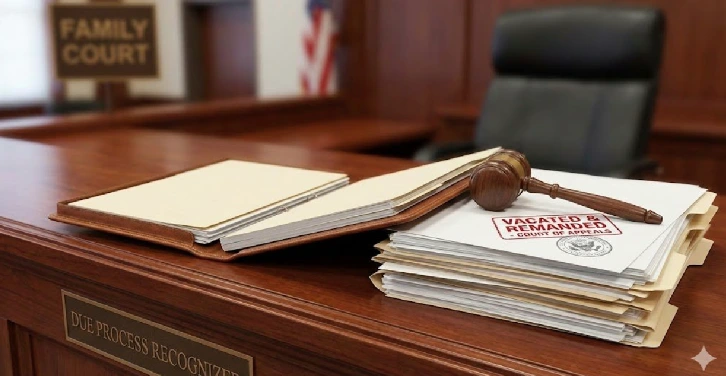
Judges reviewing uncontested divorces do not merely rubber-stamp agreements. They assess whether the settlement complies with California law and whether disclosures appear complete. Agreements that seem internally inconsistent or unfair on their face can be rejected, delaying the divorce and forcing revisions under judicial scrutiny.
This is where many uncontested divorces first derail: the belief that agreement alone guarantees legal sufficiency.
Property Division Errors That Create Long-Term Damage

Property division is often treated as a checklist exercise: house to one spouse, car to the other, bank account split in half. The problem lies in what remains unseen.
Retirement accounts, stock options, pensions, and deferred compensation frequently receive superficial attention or none at all. A 401(k) or pension earned during the marriage is community property even if only one spouse’s name appears on the account. Failing to address these assets properly, or omitting a Qualified Domestic Relations Order when required, can render a settlement incomplete or unenforceable.
Business interests introduce additional complexity. Even small, family-run businesses may contain goodwill, retained earnings, or future income streams subject to division. Assigning a business to one spouse without proper valuation can create inequity that later fuels modification requests or civil claims.
Debt oversights are equally problematic. Credit cards, personal loans, tax liabilities, and business debts incurred during the marriage generally fall under community responsibility. When couples ignore or underestimate shared debt, enforcement problems often arise post-judgment, particularly when creditors pursue one spouse for obligations assumed by the other.
For readers seeking a deeper understanding of how courts evaluate asset division disputes, internal resources such as property division guidance available through family law analysis sections on Top10DivorceLawyers.com can provide valuable context and comparative insight.
Spousal Support: When Informal Agreements Backfire
Spousal support is frequently minimized or waived altogether in uncontested divorces, often without a clear understanding of legal standards or future implications. California courts consider multiple factors when evaluating support, including length of marriage, earning capacity, standard of living during marriage, and contributions to the household.
A common mistake involves informal waivers drafted without precise language. A poorly written waiver may fail to permanently terminate jurisdiction, allowing one spouse to seek support years later. Conversely, an agreement that attempts to limit support without adequate disclosure or justification may be deemed unconscionable and rejected by the court.
Support calculations based on current income alone can also be misleading. Variable income, bonuses, commissions, or anticipated career changes should be evaluated carefully. An agreement that ignores foreseeable changes can quickly become unworkable, prompting post-divorce litigation that undermines the very purpose of choosing an uncontested path.
Readers interested in understanding how spousal support disputes evolve often explore detailed spousal support explanations found within divorce law educational sections on the same site, where long-term consequences are analyzed in real-world scenarios.
Disclosure Obligations That Cannot Be Waived Away
California imposes strict financial disclosure requirements on divorcing spouses, regardless of whether the divorce is contested. Each party must exchange preliminary and final declarations of disclosure, listing all assets, debts, income, and expenses. These obligations exist to prevent fraud, concealment, and coercion.
Skipping disclosures, filing incomplete forms, or assuming mutual trust eliminates the need for formality creates serious legal exposure. Courts retain the authority to set aside judgments obtained through nondisclosure, even years after the divorce is finalized.
In uncontested divorces, disclosure failures often occur unintentionally. Couples share finances informally during marriage and assume they understand the full picture. Yet forgotten accounts, undervalued assets, or misunderstood liabilities can later form the basis of legal challenges.
This risk becomes particularly acute when one spouse has significantly greater financial knowledge or control, a scenario courts examine closely when assessing fairness.
Judicial Review and the Myth of Automatic Approval
Many couples assume that once documents are signed and filed, approval is guaranteed. California judges, however, are tasked with ensuring compliance with statutory requirements, particularly in matters involving property and support.
Agreements that lack clarity, omit mandatory language, or contradict disclosure statements can trigger judicial concerns. Courts may request amendments, additional documentation, or even a hearing, transforming a supposedly uncontested divorce into a delayed, stressful process.
When child support or custody is involved, judicial oversight becomes even more rigorous, as the court must prioritize the child’s best interests regardless of parental agreement. Although this article focuses on property and spousal support, the same principle applies: agreement does not override legal standards.
For those exploring how courts handle rejected settlements, internal articles discussing judicial review processes within California divorce proceedings can offer relevant insight.
Post-Judgment Consequences of Oversimplification
The most damaging effects of oversimplified agreements often appear after the divorce is final. Enforcement actions, modification requests, and civil disputes frequently stem from vague or incomplete settlements.
A spouse who later discovers an undisclosed asset may seek to reopen the case. An unsupported waiver of spousal support may collapse under financial strain. Debt allocation errors can lead to credit damage or collection actions against an unsuspecting ex-spouse.
At that stage, the cost savings of an uncontested divorce evaporate, replaced by litigation expenses that could have been avoided through careful drafting and informed negotiation.
When Legal Guidance Becomes a Safeguard, Not an Obstacle
Choosing an uncontested divorce does not require abandoning legal counsel. In many cases, limited-scope representation or document review provides sufficient protection without escalating conflict or cost.
Attorneys familiar with California family law identify red flags that non-lawyers often overlook: missing retirement language, inadequate support waivers, incomplete disclosures, jurisdictional issues. Their role in uncontested cases is preventive rather than adversarial.
For individuals comparing legal options, informational pages outlining different divorce approaches and legal representation models can help clarify when professional guidance adds value without undermining cooperation.
FAQs
Is an uncontested divorce always cheaper in California?
An uncontested divorce usually involves lower upfront costs, but errors in property division or support can lead to expensive post-judgment litigation.
Can a judge reject an uncontested divorce agreement?
Yes. California judges review agreements for legal compliance and fairness, particularly regarding property division, disclosures, and support.
Can spousal support be permanently waived?
It can, but only with precise language and full financial disclosure. Poorly drafted waivers may allow future support claims.
What happens if assets are left out of the divorce agreement?
Undisclosed or omitted assets may allow the court to reopen the case, even after the divorce is finalized.
Do both spouses need lawyers in an uncontested divorce?
Not necessarily, but legal review helps prevent costly mistakes, especially in cases involving property or long-term support.